As 2026 comes to a close, a significant network infrastructure refresh cycle is underway and 2027 is an opportunity to rethink your network, not just replace your equipment.
In its Q2 FY2026 earnings presentation, Cisco identified tens of billions of dollars in pre-Catalyst 9000 installed infrastructure nearing end of support, describing a multiyear, multibillion-dollar campus networking refresh opportunity.
For organizations running aging infrastructure, the clock is ticking. Cisco's Catalyst 2960-X switches, for example, reach their final hardware support date on October 31, 2027.
But before IT leaders start assembling equipment lists and replacement budgets, there's a bigger question worth asking: If you're investing in your network, why simply replace what you already have?
Technology considerations have evolved since many business networks were originally designed. More applications have moved to the cloud, device density has increased, security requirements & risks have evolved at record pace, and the lines between networking and security requirements are increasingly blurred.
A tech refresh now presents a valuable opportunity to reassess the entire environment, not just equipment reaching end of life.
New Hardware, Old Architecture
Networks rarely stay exactly as they were originally designed; with each business evolution, technology needs change.
New locations, new applications, more connected devices, cloud migrations, and increasingly sophisticated security requirements are introduced over time. Configurations change, policies accumulate, and infrastructure is adapted to accommodate immediate business needs.
But how often is the entire architecture reassessed? When was the last time you reviewed user and device access, security policies, and network configurations?
Before replacing aging switches, routers, or firewalls, organizations should evaluate whether their existing design still makes sense today, and tomorrow.
Are security policies aligned with current business requirements? Is segmentation appropriate? Are configurations consistent? Are there unnecessary dependencies, bottlenecks, or opportunities to simplify?
A like-for-like replacement may resolve a hardware lifecycle issue while preserving years of accumulated complexity.
"New hardware doesn't automatically mean a modern network. Sometimes it just means outdated architecture is just running on faster equipment." - Ben Davis, Business Development Director | Technium
An architectural assessment before procurement can uncover opportunities to improve performance, strengthen security, reduce operational overhead, and potentially avoid unnecessary investments.
The Cost of Waiting May Be Greater Than the Cost of Refreshing
When budgets are tight, extending the useful life of networking equipment is understandably appealing. If the switches are still switching and the routers are still routing, why replace them?
Because operational functionality and security viability are two very different things.
As equipment ages, organizations face discontinued security updates, unsupported operating systems, hardware limitations, and compatibility gaps with modern applications and management platforms.
Meanwhile, attackers aren't slowing down.
According to CrowdStrike’s 2026 Global Threat Report, attacks by AI-enabled adversaries increased 89% year over year. CrowdStrike also reported that 40% of vulnerabilities exploited by China-nexus adversaries targeted edge devices, as the network edge has become increasingly attractive to attackers.
These findings underscore the importance of maintaining visibility, patchability, and control across network infrastructure.
Although unsupported equipment doesn't guarantee a security incident, it does create dramatically increased risk. When vulnerabilities emerge and patches are no longer available, organizations can be left with limited options to mitigate exposure.
The question isn't simply whether your equipment can continue operating. It's whether you can continue operating it securely, reliably, and economically.
Improving Wireless Is More Than Adding Access Points
Wireless has become foundational to business operations, but refresh planning often begins and ends with selecting the next generation of access points.
More Aps. Faster speeds. Newer standards.
Unfortunately, 'more' isn't always better.
Wireless performance depends on much more than the number or generation of APs deployed. Building materials, interference, device density, roaming requirements, application demands, and RF design all influence the user experience.
Newer APs may require greater PoE capacity, multigigabit switching, improved uplinks, or updated cabling. Authentication, segmentation, and security policies also need to function consistently across wired and wireless environments.
A wireless site survey, paired with an assessment of the supporting network, can reveal issues that equipment replacement alone won't resolve.
"Your wireless network doesn't operate independently of the wired infrastructure supporting it…Adding more access points won't fix a network that wasn't designed for the demands being placed on it." – Marius Janulis, CTO | Technium
Before investing in Wi-Fi 6E, Wi-Fi 7, or additional coverage, make sure the underlying architecture can deliver the experience your users and applications actually require.
Convergence Is Changing the Tech Refresh Conversation
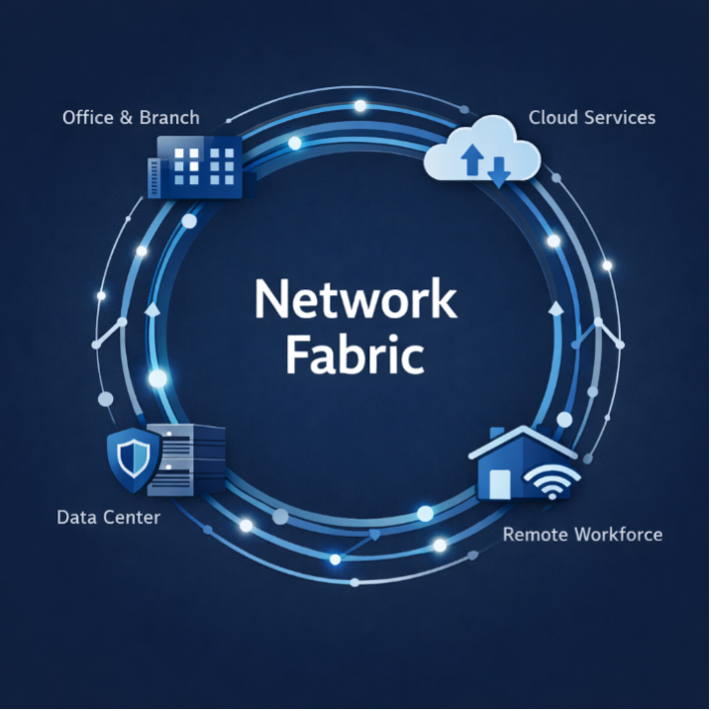
Perhaps the most significant opportunity in today's refresh cycle is the convergence of networking and security.
Functions that once required separate appliances, management platforms, and operational processes are increasingly being delivered through integrated hardware, cloud services, software-defined architectures, and unified strategy.
Consider the evolution of SD-WAN toward Secure Access Service Edge (SASE): According to a July 2026 CloudStack Networks article citing Gartner research, 70% of SD-WAN purchases are forecast to be integrated into single-vendor SASE platforms by 2028, compared with approximately 25% in 2025.
That's a significant shift toward unified networking and security.
SASE combines SD-WAN capabilities with cloud-delivered security services, creating opportunities for consistent policy enforcement, simplified management, and improved visibility across distributed environments.
But convergence isn't necessarily synonymous with consolidation into a single vendor.
Some organizations benefit from a unified platform. Others require independent security controls, greater architectural flexibility, or a combination of hardware, cloud, and software-based capabilities.
A single-vendor architecture may simplify administration while introducing new dependencies, operational considerations, or concentration of risk.
The same considerations apply to modern networking hardware. Multifunction platforms can consolidate capabilities previously delivered through several devices, potentially reducing physical footprints, licensing complexity, and management overhead.
But the right answer depends on the environment.
"Convergence should simplify your network, not compromise your flexibility. The right architecture is the one that supports your business, not the one that checks the most boxes." – Michael Joseph, CEO | Technium
Rather than automatically moving to the next generation of an existing product, organizations should evaluate how emerging technologies and evolutionary architecture choices might better support their performance, security, resilience, and operational requirements.
Think Beyond Acquisition Cost
A network refresh is a significant investment, but equipment pricing is only part of the story.
Licensing, subscriptions, maintenance, support agreements, power consumption, management tools, and internal operational resources all contribute to total cost of ownership.
An architecture that appears less expensive at procurement may prove more costly to maintain over its lifecycle. Overtime, a ‘next best thing,’ straight replacement approach could also act as a bottleneck, restricting the ability of your business to grow.
Conversely, opportunities to consolidate infrastructure, automate routine management, simplify support requirements, and deliver on a holistic strategy provide value well beyond a hardware investment.
Supply chain lead times, migration planning, and implementation resources also deserve consideration, particularly when approaching firm end-of-life and end-of-support deadlines.
“The objective of a tech refresh shouldn't be to purchase a direct replacement. It should be to make the most effective investment in where your business is headed over the next three to five years.” – Gina Denton, VP Product | Technium
Refresh for Where You're Going, Not Just Where You've Been
A network refresh is one of the few natural opportunities to reconsider foundational infrastructure before committing to another multiyear technology lifecycle.
-
-
What will your business look like in three to five years?
-
Will you be supporting additional locations, more connected devices, new applications, or greater cloud adoption?
-
Are your security and compliance requirements changing?
-
Does your organization have the visibility and operational resources to manage the environment you're planning to build?
-
Will your proposed architecture accommodate those changes without another costly interim redesign?
These are conversations worth having before equipment is specified and purchase orders are issued.
Make Your Next Tech Refresh a Strategic Advantage
At Technium, we believe the most valuable network conversations begin with understanding the business, not selecting the hardware.
Whether you're approaching end-of-support deadlines, improving the wireless experience, exploring new technology platforms, or reconsidering your overall architecture, the opportunity is the same: build an infrastructure that supports your business today and prepares you for what's next.
Don't just replace hardware. Reframe your network refresh around your business priorities.
Let's build and operate exceptional networks. Together.
______________________________________________________________________________
Referenced:
Cisco Systems, Inc. (2022). End-of-sale and end-of-life announcement for the Cisco Catalyst 2960X product family.https://www.cisco.com/c/en/us/products/collateral/switches/catalyst-2960-x-series-switches/eos-eol-notice-c51-744432.html
Cisco Systems, Inc. (2026, February 11). Q2 fiscal year 2026 earnings slides [Investor presentation]. https://s21.q4cdn.com/812015656/files/doc_events/2026/02/Q2-26-Earnings-Slides.pdf
CloudStack Networks Editorial. (2026, July 15). Gartner forecasts 70% of SD-WAN purchases will integrate into single-vendor SASE platforms by 2028. CloudStack Networks. https://cloudstacknetworks.com/news/cmrm18kq10001snifublbu6n2
CrowdStrike. (2026). 2026 global threat report. https://www.crowdstrike.com/en-us/resources/reports/global-threat-report-executive-summary-2026/

 Technium
 Technium : Jul 23, 2026, 8:00:03 AM