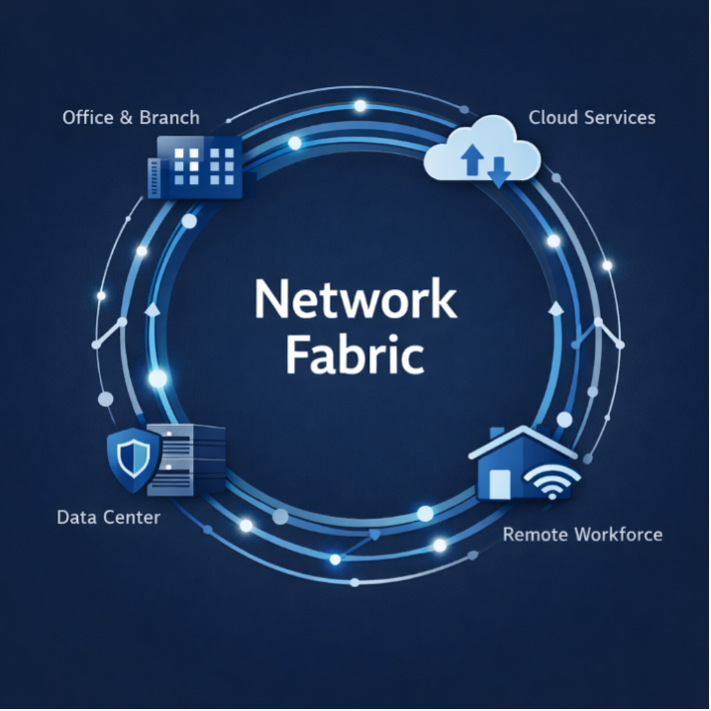
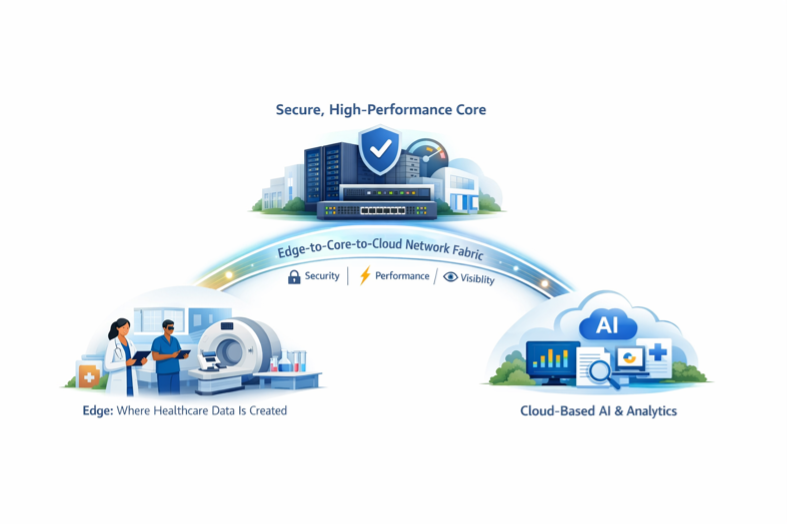
Modern businesses rely on complex networks to keep everything running—from email and file storage to customer data and critical applications. Behind the scenes, these systems are often managed by IT providers using tools called RMM (Remote Monitoring and Management) platforms. These tools allow IT teams to monitor systems, fix problems, and manage networks remotely. They provide visibility (seeing what’s happening across systems), automation (fixing issues without manual work), and centralized control.
But with that power comes a serious reality: The same tools that help manage networks can also become the fastest way to compromise them - through the exact system that was created to keep companies safe.
Artificial intelligence (AI) has empowered both amateur and professional hackers to compromise networks more efficiently and at scale. As AI becomes a powerful "force multiplier" for cyber attackers, organizations face unprecedented challenges in protecting their digital infrastructure. Innovative security architectures can make the difference between a secure network and a compromised one.
“Imagine your company as a castle, and your network as the inner workings. Attackers could come over the drawbridge, through the windows, or scale the walls. Knowing that AI is a force multiplier, Technium has already put all the locks in place, ensuring that each entry point has multiple layers of security, making it intentionally difficult to get in.” - Gina Denton, VP Product Management at Technium
Why RMM Is So Powerful—and So Risky
RMM platforms operate with elevated privileges, meaning they often have full access to systems across multiple organizations. Now, attackers can rapidly deploy large numbers of virtual machines to test multiple entry points into secure systems. Instead of manually trying to break into a network, attackers can now deploy what’s essentially an “army” of automated tools to probe for weaknesses. Companies using RMM platforms present attractive targets for such attacks, potentially leading to ransomware deployment or data theft across multiple client systems.
A well-known example is the Kaseya VSA supply chain attack, where attackers exploited an RMM platform to impact hundreds of organizations at once. This type of event is called a supply chain attack—when hackers target a trusted provider to reach many downstream customers.
More recent incidents show this isn’t slowing down. In fact, attackers are increasingly targeting RMM tools because they act as central access points into multiple networks, providing access to:
-
- Entire customer networks
- Critical infrastructure
- Sensitive data
When the Tools You Trust Open the Door to Attack
One of the biggest challenges with RMM-related attacks is visibility. In normal operations, RMM tools are trusted. They are supposed to:
-
- Act as administrator log-ins
- Make system changes
- Install software
But attackers can use that same trust to blend in. They may:
-
- Disable security tools
- Extract data while appearing legitimate
- Move across systems unnoticed
From a security standpoint, this is a worst-case scenario—because the activity doesn’t immediately look suspicious.
Why Traditional RMM Security Falls Short
Many managed service providers (MSPs) rely on cloud-native RMM tools that, while convenient, create significant security vulnerabilities. These platforms often use agent communication systems that can be compromised, providing attackers with a direct pathway to multiple client networks simultaneously. The challenge is compounded by common cost-cutting measures:
-
- Low-cost, open-source tools that lack robust security features
- Inexperienced developers who may introduce vulnerabilities through poor coding practices or over-reliance on untested AI-generated code
- Shadow IT practices where employees use unauthorized tools that bypass company security policies
These compromises in security infrastructure are like leaving the keys in your car with the windows open—they create opportunities for bad actors to exploit.
“The challenge of justifying security budgets to leadership and finance teams is real. However, the cost of inadequate security—in terms of ransomware payments, data breaches, regulatory fines, and reputational damage—far exceeds the investment in professional network operations and secure RMM solutions.” - Michael Joseph, CEO at Technium
Poor AI Governance is Risky
The risks of poor AI governance are significant. Organizations must treat their AI security with the same seriousness they would apply to protecting their most valuable trade secret. As organizations increasingly adopt AI tools like ChatGPT and Claude, organizations must:
- Carefully control and tag data to prevent sensitive information from being shared publicly
- Test AI models to ensure they honor security classifications (similar to military clearance levels)
- Avoid shadow IT practices where employees use unauthorized AI tools
- Thoroughly test and validate AI-generated code to prevent security vulnerabilities
Why Professional Network Operations Matter
Strong network operations are not just about keeping systems online—they’re about designing environments that remain secure even if something goes wrong.
At a high level, this includes:
-
- Segmentation: Separating systems so a breach in one area doesn’t spread
- Regular patching: Fixing known vulnerabilities quickly
- Least privilege: Giving users only the access they need
- Multi-factor authentication (MFA): Adding extra layers of login security
- Continuous monitoring: Watching for unusual behavior in real time
These practices reduce what’s known as the “blast radius”—the amount of damage a single attack can cause.
The Technium Solution: Secure-by-Design Network Operations
Professional network operations require a fundamentally different approach. Technium has developed SAARC—a comprehensive system that combines security tools to ensure a secure segment for accessing client networks. This approach creates isolated, highly secure access tunnels between the company and each client's network.
Technium's SAARC approach:
-
- Security – Protecting access points and systems
- Automation – Streamlining operations safely
- Analytics – Monitoring and analyzing activity
- Remediation – Responding quickly to issues
- Compliance – Meeting regulatory and security standards
This model combines multiple tools and practices into a unified security framework.
“Technium’s unique value to the customer is taking our deep experience in network and security and staying focused on our particular expertise—protecting client data with the same discipline and care we apply to our own. In an era of AI-driven threats, we value and understand the importance of this two-way relationship” - Greg Denton, Director of Operations at Technium
Strategies:
Isolated Security Pods
Rather than relying on a single centralized system, Technium creates isolated "pods" within their network to protect customer data. Each client has their own isolated infrastructure with secure pathways that prevent cross-client communication. Even if Technium's centralized network were compromised, the isolated access tunnels to individual customer networks maintain their own monitoring agents and encryption protocols, making it extremely difficult for attackers to reach customer networks.
Multi-Layered Defense Architecture
This security approach functions as a multi-layered defense system with secure "tunnels" and access points that require multiple authentication steps to reach specific customers. Think of it like a valuable delivery that requires multiple security checkpoints—each layer provides additional protection against unauthorized access.
Why This Matters More Than Ever
Today’s networks are:
-
- More connected
- More targeted
- More complex
RMM tools sit at the center of all of it. That means your IT provider’s security is no longer separate from your business—it is part of your business.
RMM platforms are essential to modern network operations. They make it possible to manage complex systems efficiently and at scale. But they are also high-value targets. The difference between risk and resilience comes down to how those systems are designed and managed. Professional network operations—built on secure architecture, disciplined access, and continuous monitoring—turn RMM from a vulnerability into a strength.
Learn more about Technium’s new enhanced Network Operations as a Service.
As part of our Network Operations as a Service Suite, new services include remote monitoring as a core component of the service. Technium operates securely through our SAARC approach, best of breed enterprise-class monitoring tools, and unmatched expertise at every level.
About Technium
Technium is an enterprise-class network architecture and managed network services provider specializing in secure, high-performance, edge-to-cloud infrastructure.
As AI adoption accelerates, network performance and data movement are no longer background considerations. They directly impact revenue, operations, and customer experience.
Technium helps organizations become AI-ready by designing and operating networks that deliver:
-
- Predictable, high-performance data movement across distributed environments
- Resilient architectures that minimize bottlenecks and performance degradation
- Infrastructure aligned to support AI-driven workloads and real-time processing
- Operational confidence through proactive monitoring, management, and expert support
From targeted assessments to fully managed Network as a Service, Technium enables organizations to align infrastructure performance with AI initiatives, business outcomes, and growth.
Technium | Build and Operate Exceptional Networks
Learn More about Technium’s unique advantage to secure your network:
AI is Already Operating Inside Your Network
The Human Layer in an Autonomous World
Unlocking GenAI: Building a Secure and Reliable Network Foundation

 Technium

 Technium : Feb 27, 2026, 10:52:20 AM