Most organizations do not intentionally design complex networks. They evolve into them.
A new branch location is added. A cloud environment is introduced, then another. Remote access is enabled. Shadow IT steps into the light as security controls are layered in. Each decision is rational and necessary, but often made in isolation.
Over time, the environment becomes something different. Rather than a cohesive system, it has now evolved to be a chaotic accumulation of decisions made under constantly changing assumptions and priorities.
For years, operating in this manner has been manageable, but now Artificial intelligence is changing that perspective.
AI as Both Tool and Workload Shift
Across industries, IT teams are being asked to “implement AI.” The expectation from leadership is clear, but the functional path forward is not. Why? Because AI represents both a tool and a workload shift.
AI is being introduced as copilots, assistants, and platforms designed to improve productivity. In that sense, it behaves like any other application layer investment. However, at the same time, it introduces a different workload profile: changing how data is accessed, data movement, and how performance is experienced.
Most organizations are preparing for the first; far fewer are addressing the second.
That gap is where friction begins.
“From a network perspective, AI isn’t something you just layer in. It changes how data moves and how sensitive applications become to performance. If the network wasn’t designed intentionally, you’ll see it in latency, inconsistency, and unpredictable behavior. Before focusing on the AI tools themselves, it’s worth understanding whether the underlying network can actually support what those tools require.” – Marius Janulis, Technium Co-Founder & Principal Architect
This is where traditional network design begins to fall short. Modern environments, particularly those supporting AI, require more than well-architected connectivity. They require integrated, high-performance data movement across the entire ecosystem.
AI does not create these issues. It exposes them.
Technology Spread Meets AI Demand
Modern networks reflect years of growth. They span clouds, regions, and often globally distributed users. Applications exist across legacy and modern platforms. Security and connectivity tools have been layered in over time.
This “technology spread” has worked for traditional applications. It has been flexible enough, resilient enough, and good enough to support business operations. Undoubtedly, AI changes that.
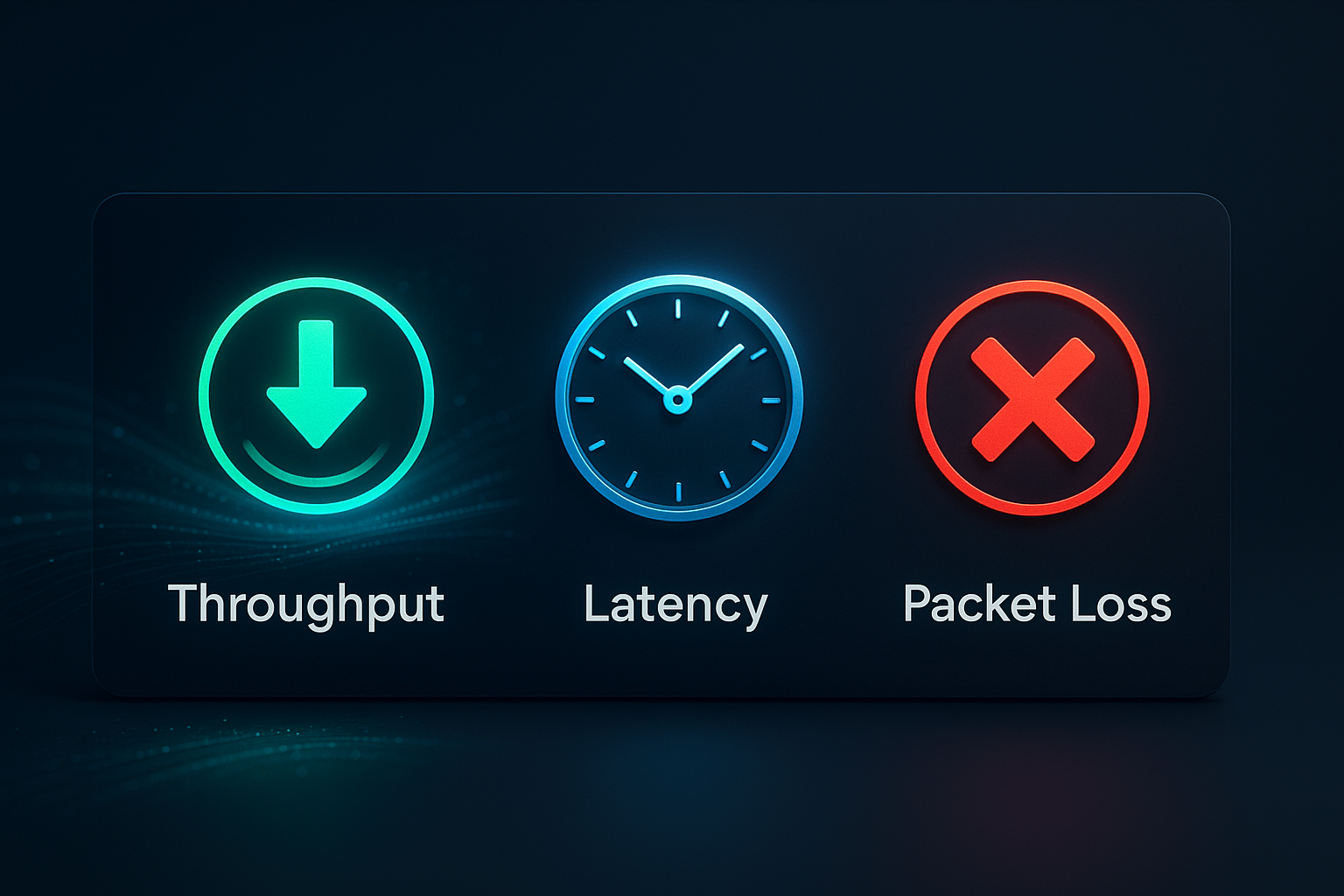
AI workloads are far less forgiving. They introduce a new set of performance expectations that quickly expose the limits of organically evolved environments. Requirements that were once secondary now become foundational:
- High-throughput data movement
- Low, predictable latency
- Consistent application performance
- Alignment between compute, storage, and network
When these elements are not aligned, the impact is immediate and visible at the application level. What once operated quietly in the background begins to strain: performance degrades, variability increases, outcomes become inconsistent.
This is the inflection point where adoption of Network Fabric becomes critical.
Because the issue is not simply performance. It's coordination. Traditional architectures treat connectivity, security, and data movement as separate layers, each optimized independently. AI workloads do not operate that way. They require these elements to function as a unified system.
A Network Fabric approach addresses this directly by integrating:
- Connectivity across multi-cloud, colocation, and edge environments
- Security as an embedded, consistent control plane
- Data movement optimized for high-performance, low-latency exchange
"Instead of stitching together discrete parts, Network Fabric creates an environment where the network behaves as a coordinated system, aligned to how modern AI workloads actually execute." – Marius Janulis, Technium Co-Founder & Principal Architect
Increasing Complexity and Modern Challenges
At the same time, the broader business environment is accelerating. Expansion, acquisition, consolidation, and cloud transformation are happening in parallel with AI implementations, each introducing new dependencies into the network. The margin for inefficiency is narrowing significantly in real time. The network is no longer simply supporting change - it's expected to enable it, without compromise. Complexity now becomes constraint.
A fragmented network can function for years without forcing change, but as organizations deepen their investment in AI, patterns begin to emerge:
- Initiatives stall or underperform
- Performance varies across environments
- Costs rise without clear attribution
- Security controls overlap or introduce inefficiencies
- IT teams spend more time maintaining than advancing
Once this point is reached, the network is no longer just complex. It actively limits what the business can achieve.
And importantly, this is not a tooling problem. Adding more solutions does not resolve structural misalignment. At scale, this is an architectural issue. Increasingly, that architecture must be designed as a fully integrated, secure Network Fabric, not a collection of interconnected parts.
This architectural reality collides with another increasingly common challenge: the distributed workforce. Users are remote, hybrid, and global, interacting daily with data-intensive, AI-enabled applications. Their expectations are straightforward:
- Performance and user experience should be consistent
- Access should be seamless, regardless of location
- Security should be effective, but invisible
Most organically evolved networks were never designed to deliver this experience at scale. The result is variability across performance, user experience, and operations. In an AI-driven environment, that variability is no longer acceptable.
Network Fabric is what closes that gap. It aligns infrastructure to workload behavior, reduces operational friction, and enables consistent performance across environments. More importantly, it removes the architectural constraints that prevent AI and data-intensive applications from delivering their full value.
It is not just an evolution of network design, it is the very foundation required to move forward.
What's Next? Network Architecture to Fabric
AI adoption will continue to accelerate. Applications and tools will evolve more rapidly through AI integration. Expectations for performance and outcomes will continue to rise. So, the objective cannot be to simply eliminate complexity. Modern environments will always be complex, but the foundation of tools, models, and platform performance remains unchanged:
- If the network environment is fragmented, performance will suffer.
- If the network environment is intentionally designed, AI will become a force multiplier.
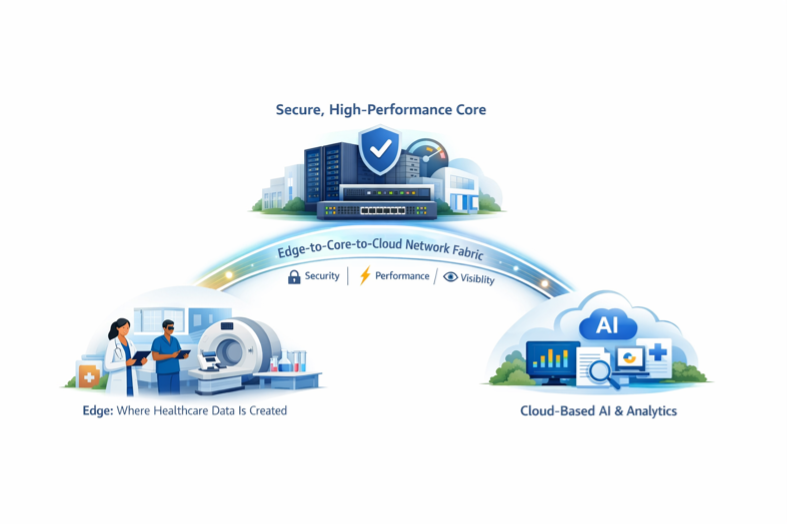
Network design now extends beyond traditional architecture into fully integrated Network Fabric models. A Fabric approach unifies connectivity, security, and data movement into a single, high-performance system that supports both human workflows and AI-driven workloads at scale.
A well-designed Fabric enables:
- Alignment to business priorities and AI use cases
- Integrated system interaction across cloud, edge, and core
- Consistent, predictable performance
- Efficient, secure data movement across environments
This is how complexity is reduced, not by removing systems, but by connecting them through a purpose-built Network Fabric designed for how modern applications and AI actually operate.
Starting the Conversation
You don’t need to start with full transformation; that's risky. You need to start with understanding.
- What are the main technology challenges you’re facing today, outside of AI?
- How do you envision using AI to address critical business issues?
- Where is complexity creating friction in your business?
- How well does your network support expanding AI workloads?
- Where are performance and scalability at risk?
Technium offers a 30-minute consultation to discuss your environment, identify areas of improvement, and align your network architecture with your business objectives. No obligation. Just a practical, technically grounded discussion with one of our Engineers.
AI is an incredible tool, but it only delivers true value when the underlying Network Fabric is designed for how the workload actually operates.
Why Technium?
Technium is the leader in Edge-to-Core-to-Cloud Data Fabrics in New England. Technium co-designed and operates the Fabric in the Markley Data Center that services more than 90% of all Internet traffic in New England.
At Technium, we are trusted by some of the largest enterprises in the world to operate exceptional networks. We hold direct responsibility for the management of the Northeast Network Fabric, a key component in New England’s internet and cloud traffic data exchange. That responsibility shapes how we design, build, and operate every customer’s environment: with the same expectations of precision, resilience, and measurable performance. We build and operate the networks that make this possible: secure, high-performance fabrics that link on-prem systems, data centers, and clouds with measurable reliability. The tools are new, but the mission is familiar: keep people and data connected without compromise.
At Technium, we build and operate exceptional networks.

 Technium
 Technium : Jan 28, 2026, 11:00:00 AM